

Seed Cycling and PCOS: Benefits, Myths & What Science Says
If you have Polycystic Ovary Syndrome (PCOS), chances are you’ve come across countless natural remedies promising to balance hormones, regulate periods, and improve overall wellbeing. One trend that has gained significant attention in recent years is Seed Cycling.
Supporters claim that simply eating specific seeds during different phases of your menstrual cycle can help balance hormones naturally. But does science support these claims, or is it just another wellness trend?
Let’s take a closer look at what seed cycling is, how it works, and whether it may be beneficial for women with PCOS.
What Is PCOS?
Polycystic Ovary Syndrome (PCOS) is one of the most common hormonal disorders affecting women of reproductive age.
Women with PCOS may experience:
- Irregular periods
- Hormonal imbalances
- Weight management challenges
- Acne and oily skin
- Excess facial or body hair
- Difficulty conceiving
- Insulin resistance
Because PCOS affects hormones, many women look for natural lifestyle strategies that may support hormonal balance alongside medical guidance.
What Is Seed Cycling?
Seed cycling is a nutrition-based approach that involves consuming specific seeds during different phases of the menstrual cycle.
The concept is based on the belief that certain nutrients found in seeds may help support healthy estrogen and progesterone levels.
The typical seed cycling schedule looks like this:
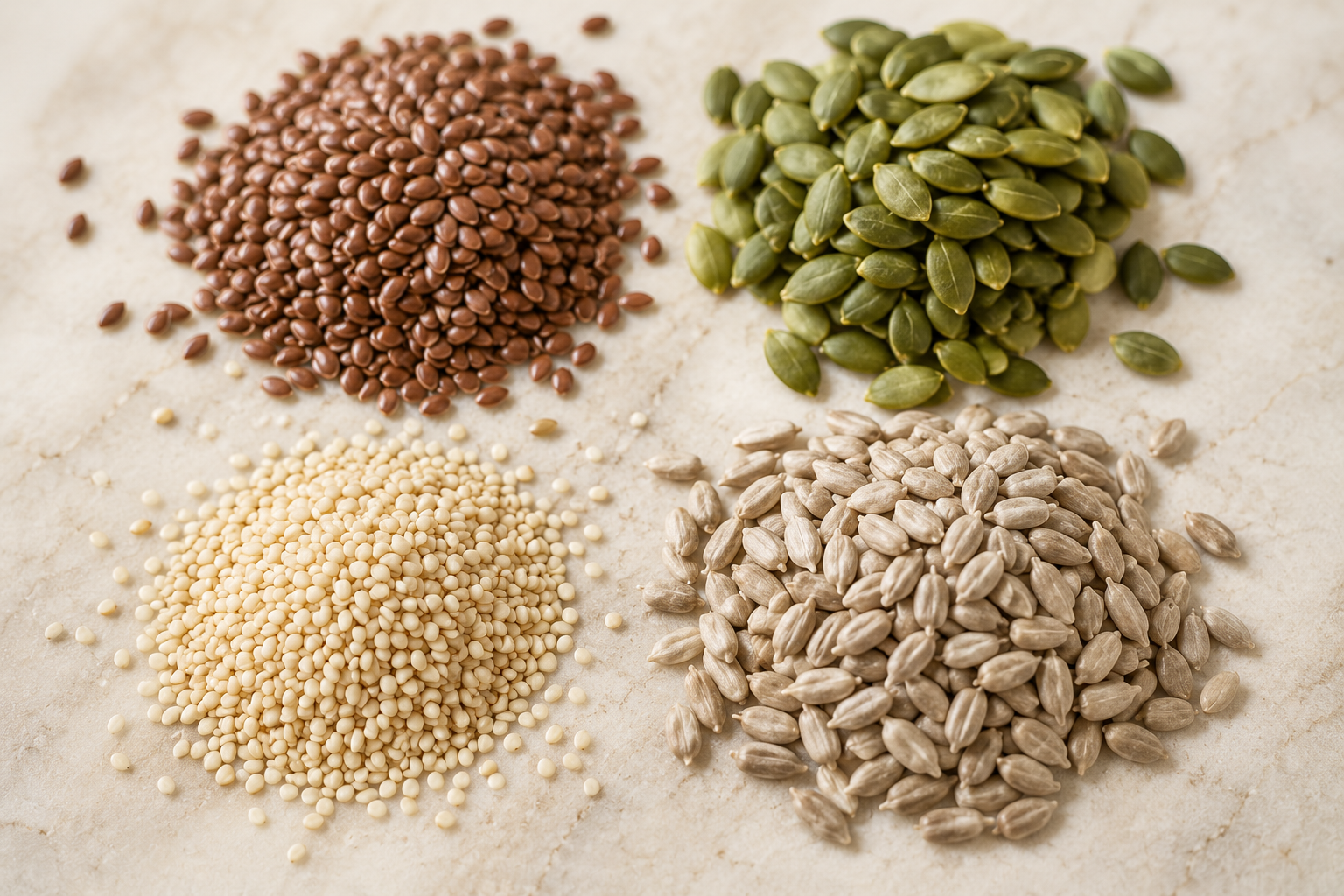
Phase 1: Flax Seeds and Pumpkin Seeds
(Day 1–14 of the cycle)
These seeds are often consumed during the follicular phase.
They provide nutrients such as:
- Omega-3 fatty acids
- Zinc
- Fiber
- Lignans
Supporters believe they may help support healthy estrogen metabolism.
Phase 2: Sesame Seeds and Sunflower Seeds
(Day 15–28 of the cycle)
These seeds are consumed during the luteal phase.
They contain:
- Selenium
- Vitamin E
- Healthy fats
- Magnesium
Advocates suggest these nutrients may help support progesterone production and hormonal balance.
Why Is Seed Cycling Popular Among Women With PCOS?
PCOS often involves hormonal irregularities.
Because seed cycling focuses on nutrient-rich foods that support overall wellness, many women are interested in it as a natural addition to their routine.
Potential reasons women try seed cycling include:
- Supporting hormonal balance
- Promoting regular menstrual cycles
- Improving overall nutrition
- Supporting skin health
- Encouraging healthy inflammation response
What Does Science Say About Seed Cycling?
This is where things become important.
Currently, there is limited direct scientific evidence proving that seed cycling itself can regulate hormones or treat PCOS.
While the individual seeds contain beneficial nutrients, there are very few clinical studies specifically evaluating seed cycling as a treatment strategy.
However, the seeds involved are highly nutritious and may contribute positively to overall health.
For example:
Flax Seeds
Contain lignans and omega-3 fatty acids that support general health and healthy estrogen metabolism.
Pumpkin Seeds
Provide zinc and magnesium, which play roles in hormone production and overall wellness.
Sesame Seeds
Contain antioxidants and healthy fats that support overall nutrition.
Sunflower Seeds
Rich in Vitamin E and selenium, nutrients involved in reproductive health.
So while seed cycling itself lacks strong clinical evidence, the seeds used certainly offer nutritional benefits.
Can Seed Cycling Help PCOS Symptoms?
The answer is: possibly, but indirectly.
Seed cycling may help support overall wellness because:
- It encourages healthier eating habits
- Increases fiber intake
- Provides beneficial fats
- Adds important minerals and antioxidants
These factors can support overall health, which may indirectly benefit women managing PCOS.
However, seed cycling should not be viewed as a replacement for:
- Medical treatment
- Professional healthcare advice
- Balanced nutrition
- Exercise
- Weight management strategies
Additional Lifestyle Changes That May Help PCOS
Research consistently shows that lifestyle habits have a major impact on PCOS management.
1. Focus on Balanced Nutrition
A diet rich in:
- Vegetables
- Fruits
- Lean proteins
- Healthy fats
- Whole grains
can support metabolic and hormonal health.
2. Maintain Regular Physical Activity
Exercise may help:
- Support insulin sensitivity
- Manage weight
- Improve mood
- Promote overall wellness
3. Manage Stress Levels
Chronic stress can affect hormone balance.
Helpful strategies include:
- Walking
- Meditation
- Yoga
- Adequate sleep
4. Consider Targeted Supplements
Some women with PCOS discuss supplements with their healthcare providers, including:
- Omega-3 Fish Oil
- Magnesium
- Vitamin D3
- Inositol
- Zinc
Always consult a healthcare professional before beginning any supplement routine.
Potential Benefits of the Seeds Used in Seed Cycling
Even if seed cycling itself is not fully proven, these seeds can still be valuable additions to a healthy diet.
Flax Seeds
- Rich in fiber
- Source of plant-based omega-3s
- Supports digestive health
Pumpkin Seeds
- Rich in zinc
- Provides magnesium
- Supports overall wellness
Sesame Seeds
- Source of healthy fats
- Contains antioxidants
Sunflower Seeds
- Rich in Vitamin E
- Provides selenium
Is Seed Cycling Worth Trying?
For many women, seed cycling is a low-risk dietary practice that encourages consumption of nutritious whole foods.
If you enjoy adding seeds to your meals, smoothies, yogurt, or salads, there is generally little downside to including them as part of a balanced diet.
However, it’s important to maintain realistic expectations.
Seed cycling should be viewed as:
- A nutritional strategy
- A wellness habit
- A complement to healthy living
—not as a proven cure for PCOS.
Final Thoughts
Seed cycling has become a popular wellness trend among women seeking natural support for hormonal health and PCOS management. While current scientific evidence does not strongly support seed cycling as a treatment for PCOS, the seeds involved are rich in nutrients that contribute to overall health and wellbeing.
For women with PCOS, the most effective approach typically includes balanced nutrition, regular exercise, stress management, quality sleep, and guidance from qualified healthcare professionals.
If you enjoy nutrient-rich foods and want to add more healthy seeds to your diet, seed cycling may be a simple and nutritious practice worth exploring.
At Fitnstyle.pk, we believe informed choices and quality nutrition are key to supporting long-term health and wellness.
Frequently Asked Questions (FAQs)
1. What is seed cycling?
Seed cycling involves eating different seeds during different phases of the menstrual cycle to support hormonal health.
2. Can seed cycling cure PCOS?
No. There is currently no evidence that seed cycling cures PCOS.
3. Are the seeds used in seed cycling healthy?
Yes. Flax, pumpkin, sesame, and sunflower seeds provide fiber, healthy fats, vitamins, and minerals.
4. How long does seed cycling take to show results?
Experiences vary, and scientific evidence is limited regarding specific outcomes.
5. Is seed cycling safe?
For most healthy individuals, consuming these seeds as part of a balanced diet is generally considered safe. Consult your healthcare provider if you have specific medical concerns.
Add a review
Your email address will not be published. Required fields are marked *